In this guide
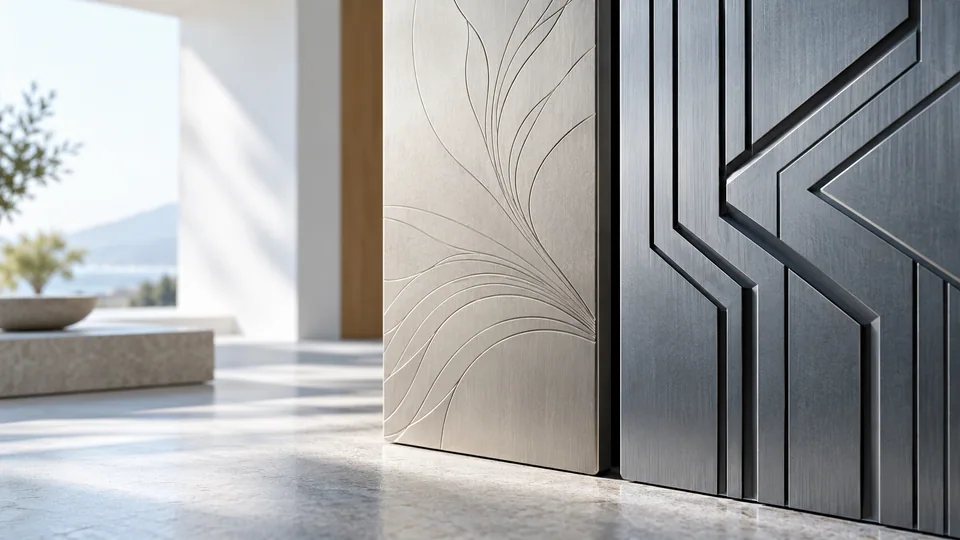
Define the finished feature: line width, relief, location, substrate and appearance after coating. Laser engraving and CNC machining describe manufacturing approaches, but a supplier still needs to confirm what those approaches produce on the proposed door skin.
For an entrance design, select the underlying system from the exterior door collection. A decorative idea must work with the door’s frame, leaf, hardware and finish rather than replace those specifications.
How should the intended door pattern be specified?
A reference image can communicate style, but it may not reveal whether a line is printed, engraved, milled or formed by separate pieces. Mark the areas where you want a visible line, recessed feature, raised detail or opening. State whether the pattern continues onto the frame or adjacent panels.
Avoid using “laser carved” as a catch-all instruction. Ask the supplier to identify the proposed method and show a representative sample of the resulting surface. Keep that sample associated with the specified substrate and finish.
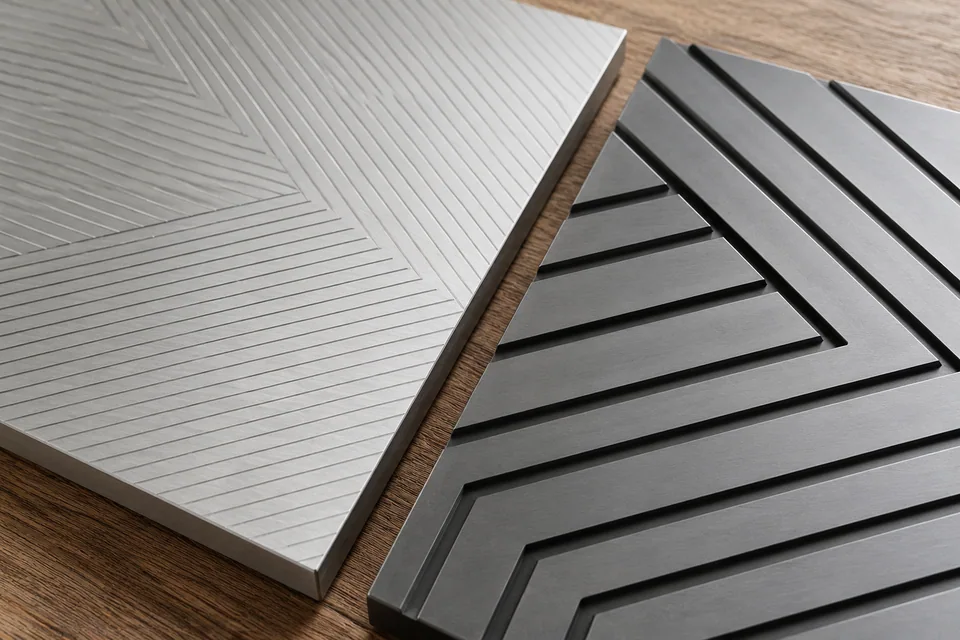
Compare the process proposals
| Desired result | Question for the proposed process | Approval evidence |
|---|---|---|
| Surface graphic | How is the mark formed and protected? | Finished sample under representative lighting |
| Recessed groove | What profile and corner shape can be produced? | Section detail and sample piece |
| Cut-through motif | What remains behind the opening? | Complete assembly section and backing detail |
| Repeated pattern | How is spacing controlled across the leaf? | Dimensioned elevation |
| Pattern at an edge | How does the detail meet the frame or adjoining panel? | Enlarged junction drawing |
Do not assume an intricate digital illustration can be reproduced without adjustment. The supplier should explain the limits of the proposed method on the actual door material.
Prepare usable artwork
Provide a dimensioned elevation and clearly identify the visible face. Include the overall pattern position, intended margins, direction and any areas that must stay clear for handles, locks, pivots or hinges. If the pattern is based on a file, confirm the format and revision that the supplier will use.
Keep a plain preview image with the production artwork so that the intended orientation can be checked. Supply only artwork you are entitled to use. A photograph of another company’s design is a visual reference, not permission to reproduce its protected graphics or branding.
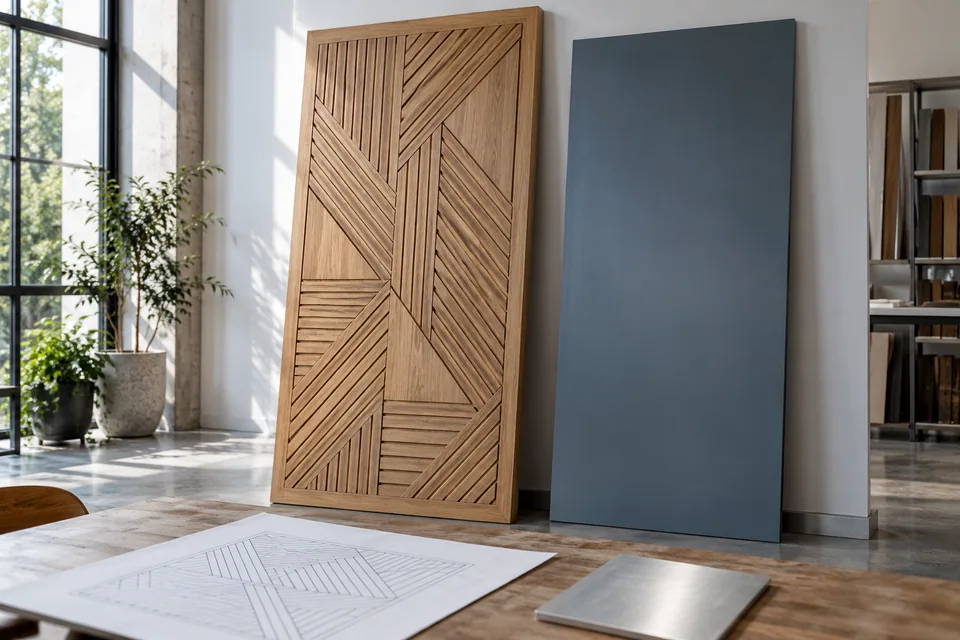
Review the pattern together with the finish
Ask whether decoration happens before or after the proposed finish and how edges or recesses are treated. Compare the finished sample, not only the unfinished machining result. The powder-coated finish guide can help identify the color, texture and approval records needed.
For aluminum pivot doors, the decorative proposal should be reviewed with leaf construction and hardware requirements. Any change that affects the assembly needs to be reflected in the drawing and quotation rather than added informally at the end.
Approve a small detail before a full-size pattern
Select a sample that includes the tightest curve, a line ending and a junction near a door edge. These reveal more than a sample containing only a long straight groove. Ask for the sample after the proposed finishing process so the reviewed object matches what will be visible on the door.
Mark which dimensions are visual priorities and which are proposed by fabrication. Confirm whether a recessed feature changes the skin build-up or needs backing; do not turn an illustration into a machining depth without engineering review. Preserve the approved artwork revision, orientation and scale.
For coated aluminum, use the FGIA coating specification scope to distinguish finish requirements from the geometry of the pattern. A coating reference does not validate the machining detail. On repeat orders, identify the master sample and artwork together so an old drawing cannot silently replace the approved pattern.
Release a pattern with clear acceptance records
Use the pivot specification and shop drawing guide to organize the final elevation, sections and finish reference. Record the approved artwork revision, sample identifier and which surfaces receive the pattern.
Ask the quote to distinguish initial artwork preparation, sample work and repeated production scope where relevant. Agree how a later reorder will reference the same design. With these records, purchasing can compare process proposals by the result actually offered, and inspection can check the delivered pattern against a specific approved detail rather than a broad decorative description.
Before you specify
Questions worth asking
Can a photograph serve as production artwork?
Use it as a visual brief. Production still needs approved geometry, scale, orientation and a representative finished sample; image perspective can distort proportions.
Sources & further reading
About this guide
A practical starting point.
Use this guide to prepare your project brief and compare proposals. Construction details and installation requirements must be checked against the selected system and its approved documents.