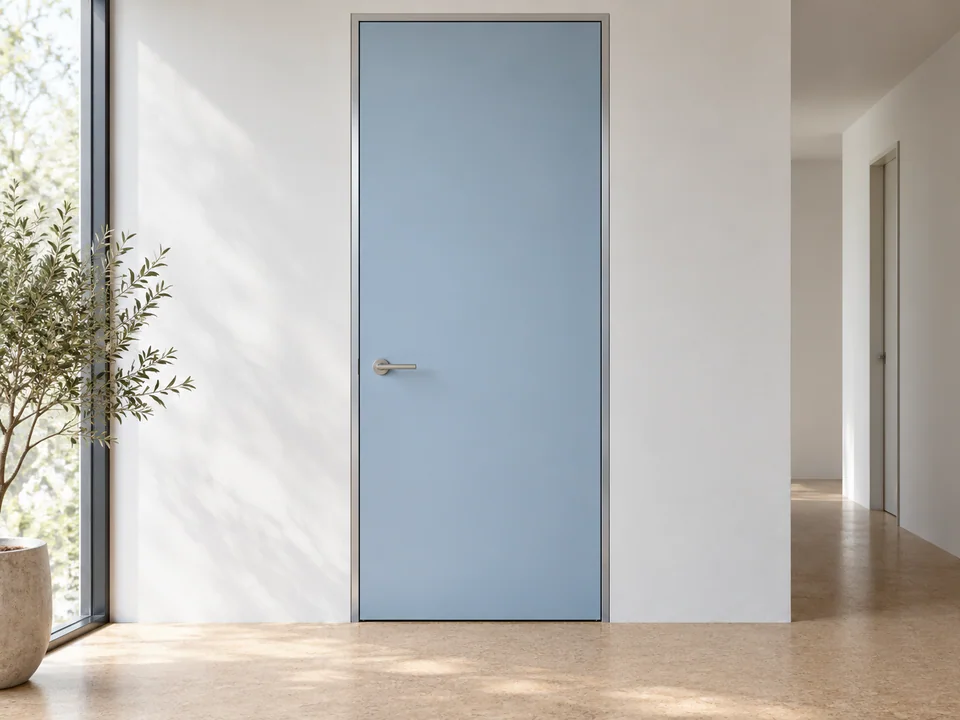
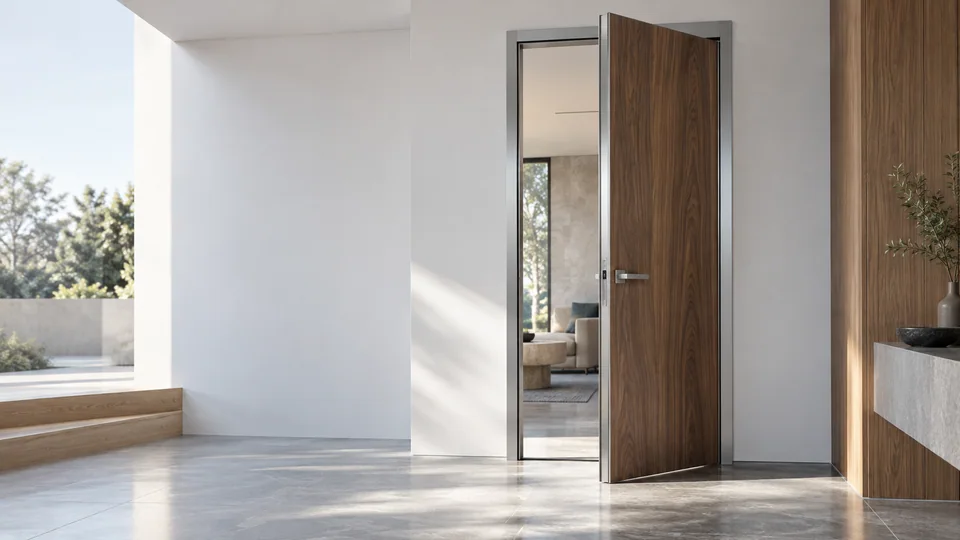
An aluminum-frame wooden interior door combines an aluminum jamb or door frame with a separate wooden or engineered-wood leaf. This is the default system described here. It does not imply that the leaf itself contains an aluminum skeleton.
What to resolve before choosing a design
| Decision | Information to confirm |
|---|---|
| Frame | Specify the jamb profile, finish, fixing and finished wall thickness. |
| Leaf | Identify the core, face material, edge treatment and hardware preparation. |
| Interfaces | Review hinges, latch, seals and wall finishing as connected details. |
Configuration and material choices
Keep this structure distinct from an aluminum-framed wood leaf, where metal can be part of the leaf perimeter or internal skeleton. Request the correct section drawing for the proposed system.
Record frame material, leaf or panel construction, visible surface, glazing and hardware as separate specification fields. This prevents a finish name from being mistaken for the underlying construction. Each alternative should be checked against the same opening and intended use.
Order the aluminum jamb and wood leaf as separate components
The door schedule should name the jamb profile and the wooden or engineered-wood leaf independently. Record finished wall thickness, the intended trim or reveal, leaf thickness and the requested surface. A decorative face does not identify the core. If there are several wall constructions in the building, group the openings by wall condition before asking for one repeated frame package.
Coordinate hinges and lock preparation across the frame and leaf drawings. Identify whether the supplier assembles the set, supplies prepared components or leaves particular preparation to the installer. Confirm edge treatment and the handover of any finish samples. Where room humidity, acoustic separation or another project criterion matters, request evidence for the proposed complete construction; the presence of an aluminum jamb does not establish those properties.
Evidence and installation boundaries
Specification limits, material availability and performance documentation are subject to technical review. A material or component report is not automatically evidence for the complete door or window assembly. Tell us about the project requirements early so the applicable configuration can be assessed.
Installation must follow the agreed drawings and the actual product instructions, with responsibilities assigned to competent people. This collection is a selection resource, not a substitute for a product-specific installation manual.
Refine the room-door design
The aluminum frame and wood leaf can be developed with different proportions and details. Compare Flush & Concealed Doors, Full-Height Doors and Double Interior Doors within the fit-out brief.
Where the room needs a sliding arrangement, the separate Interior Sliding Door guide explains the track and wall-space decisions. Confirm the sliding system’s frame or jamb independently; its name does not establish an aluminum frame.
Plan the next step
Explore Aluminum-Frame Wooden Swing Door for the related configuration.
Explore Flush Aluminum-Jamb Interior Door for the related configuration.
Explore Aluminum Jambs with Wooden Door Leaves for the related project task.
Explore Door Schedule Template for Projects for the related project task.
Explore Interior Door Packages for Fit-Out Projects for the related project task.
Send your project brief with opening sizes, quantities and the documents already available.
Door frame / jambAluminum jamb for the interior system; confirm the frame separately for wood-door packages.
Leaf coreWooden or engineered-wood construction, to be identified in the material schedule.
Visible surfaceNatural veneer or a specified decorative surface; not a definition of the core.
Edges & hardwareEdge treatment, hinges, lock preparation and seals form part of the reviewed assembly.
Schematic component relationship. This is not a manufacturing section, dimensioned drawing or performance certificate.
Before you specify
Questions worth asking
Can the size and finish be customized?
Share the opening dimensions, intended use and preferred finish. Feasibility, material availability and the final configuration are subject to technical review; no universal size range is assumed.
What should I send for a quotation?
Send a marked drawing or door schedule, project country, quantity, installation context and any specified performance requirements. Identify which hardware and glazing you need included.
Are the images confirmed product specifications?
The images illustrate design and finish options. Your written quotation, approved drawings and material samples define the final configuration and supply scope.