In this guide
Keep opening size, leaf arrangement, decorative pattern, glazing, protection system and hardware scope fixed. Otherwise, the price difference may simply reflect a missing component or a different level of fabrication.
Use the iron and steel door collection to define the intended system, then prepare a common inquiry brief. The goal is a quotation that purchasing can compare and the supplier can build against an approved drawing.
Which base configuration should an iron-door quote describe?
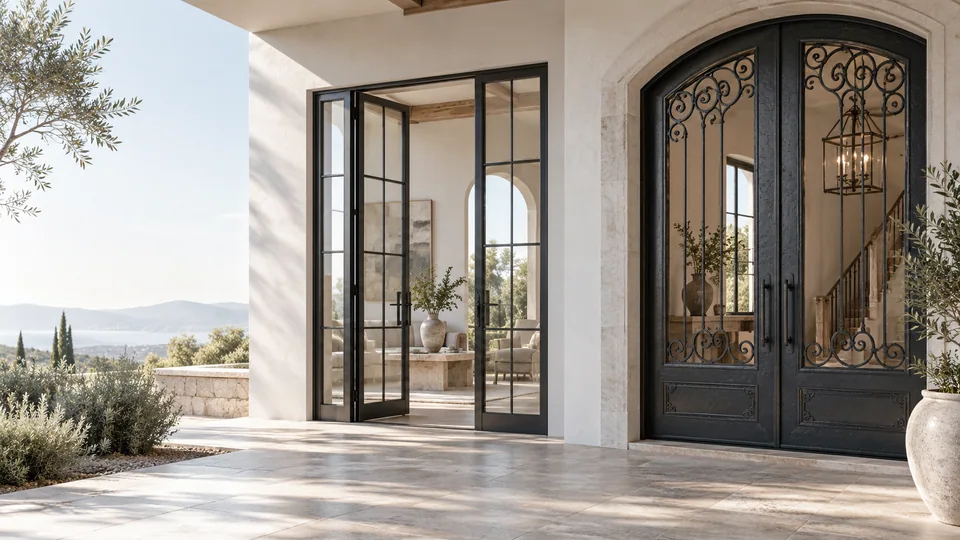
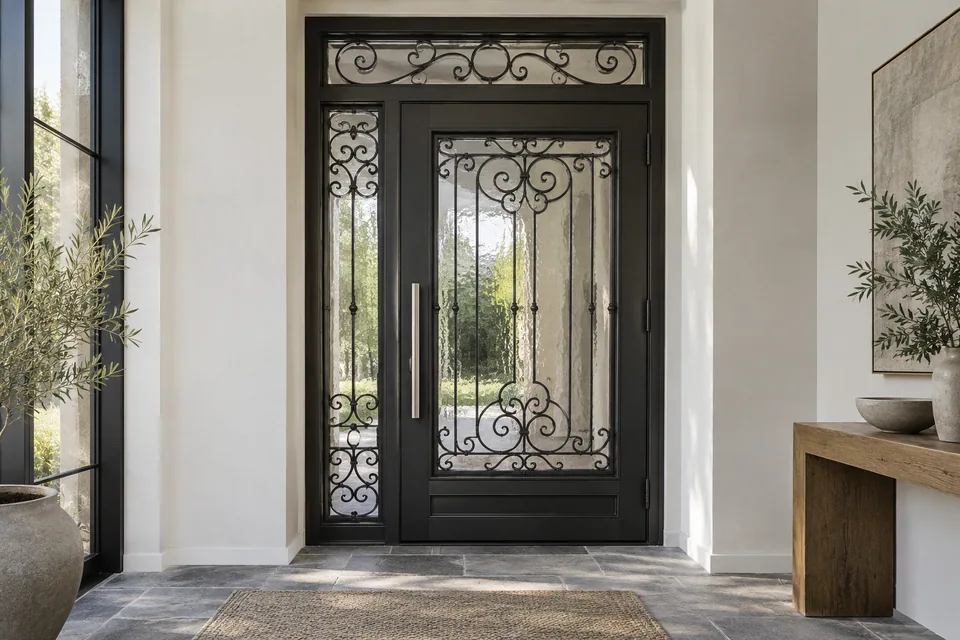
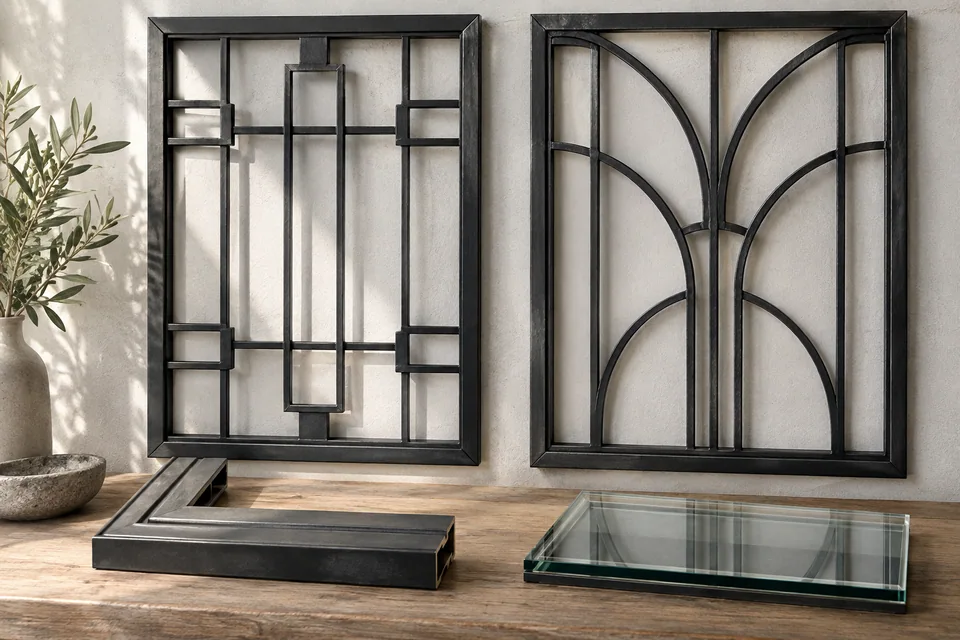
State the opening size, single or double leaf arrangement, opening direction and intended exterior or interior location. Identify sidelights, transoms and any opening glass panels separately. Provide a pattern reference, but ask for the real material and component list rather than treating “wrought iron” as a complete material description.
For iron glass entry doors, request a coordinated elevation and section. The quote should make clear whether the frame, threshold, glass and operating hardware form part of the stated assembly.
Break the quotation into comparable work
| Cost component | Information to hold constant | Possible source of a quote difference |
|---|---|---|
| Frame and leaf | Dimensions, sections and construction | Different material or assembly scope |
| Decorative work | Pattern, spacing and approved details | Different complexity or repeat requirements |
| Glass | Composition, appearance and opening method | Different glazing or subframe proposal |
| Finish | Preparation and coating schedule | Different protection or sample scope |
| Hardware | Identified locks, handles and hinges | Missing components or changed hardware |
| Packing | Crates, protection and packed dimensions | Different delivery and handling assumptions |
Do not force every supplier into the same accounting format, but obtain enough detail to explain a material difference in the total. An undefined allowance is an unresolved specification item.
Understand the effect of customization
A repeated, approved pattern can be managed differently from a new design that requires drawing development and samples. Ask whether artwork preparation, sample approval or tooling forms a separate part of the proposal. Establish what happens if the design changes after approval.
On double doors, clarify the active leaf, meeting detail and locking arrangement. For glass that opens independently, ask for the operating hardware and sealing detail to be included. These decisions should be priced explicitly rather than assumed from an inspiration image.
Include the delivery and support responsibilities
Request packed weight and dimensions when the design is sufficiently defined. Identify the proposed delivery point, unloading arrangements, storage requirements and local installation responsibility. A supply price is not a complete installed cost unless the quotation expressly covers those services.
Discuss the coating’s intended environment before approval. The steel corrosion protection guide outlines the records needed for that discussion. Ask how missing parts, visible damage and later replacement components will be identified and reported, with the actual commercial terms recorded in writing.
Compare a repeat design with a new design separately
Split the quotation into one-time design work, per-assembly supply and order-level packing or transport. Ask whether a sample, pattern drawing or special preparation is a separate line. Then confirm what would be reused in a later order and what must be quoted again.
The SDI door, frame and hardware schedule examples illustrate why assembly and hardware records should stay connected. Use that organization for comparison, without assuming its standard steel dimensions apply to ornamental iron doors.
A useful trial-order calculation divides the confirmed order-level costs by the number of assemblies only after quantities are agreed. Keep mixed designs separate where their crate size or fabrication differs. This avoids a misleading average price that cannot be reproduced when the next order changes its product mix.
Compare a trial order before planning replenishment
Distributors should distinguish a representative trial order from a future repeat-order program. Confirm the quantity mix, whether different sizes or patterns can share an order, and any order-specific minimums. Do not assume a sample price applies unchanged to another specification or quantity.
The distributor supply planning page helps organize the configuration, documents and support questions. Keep the final accepted quote linked to the drawing revision and finish sample. This provides a useful baseline for later orders and avoids presenting a single unsupported starting price as if it covered every custom iron door.
Before you specify
Questions worth asking
Should a repeat order automatically have the same unit price?
No. Use the earlier approved configuration as a reference, then reconfirm material, finish, quantity, freight and commercial validity for the new order.
Sources & further reading
About this guide
A practical starting point.
Use this guide to prepare your project brief and compare proposals. Construction details and installation requirements must be checked against the selected system and its approved documents.