In this guide
A coating proposal should identify coating chemistry, product, substrate, pretreatment, application process and the performance evidence requested for the project. PVDF and powder coating labels alone do not establish equal test scope or service life.
Begin with the assembly in the exterior door collection, then ask which finish systems are available for that construction. A finish chosen independently of the substrate and fabrication details can leave important parts of the proposal undefined.
What does the coating label actually identify?
Request the coating product name and technical documentation rather than accepting “fluorocarbon,” “premium powder” or “weatherproof paint” as complete answers. The supplier should distinguish PVDF from other fluoropolymer systems; “fluorocarbon” alone does not identify the proposed chemistry.
Have the supplier identify the proposed chemistry, application method and surface preparation separately. A marketing category cannot demonstrate compliance with a project requirement. Any claimed performance should be traced to documentation whose scope matches the proposed product and process.
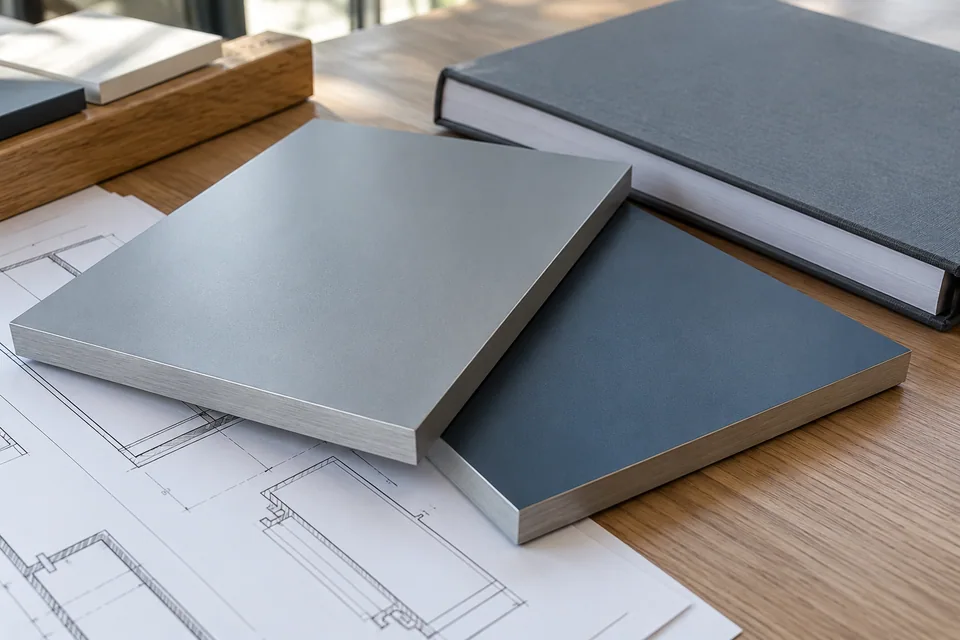
Compare like with like
| Specification topic | Information needed for either proposal |
|---|---|
| Substrate | Which frame, leaf and decorative parts receive the finish |
| Preparation | The proposed cleaning and pretreatment sequence |
| Coating product | Product identity and relevant technical data |
| Appearance | Color reference, gloss, texture and approved sample |
| Process | Application records or other evidence available for the order |
| Performance | Evidence applicable to the requirement being assessed |
| Care | Cleaning instructions and written limitations |
This creates a fair basis for the comparison. A named coating chemistry with no process details is still an incomplete proposal, just as a detailed color sample without a material record is incomplete.
Select appearance with physical references
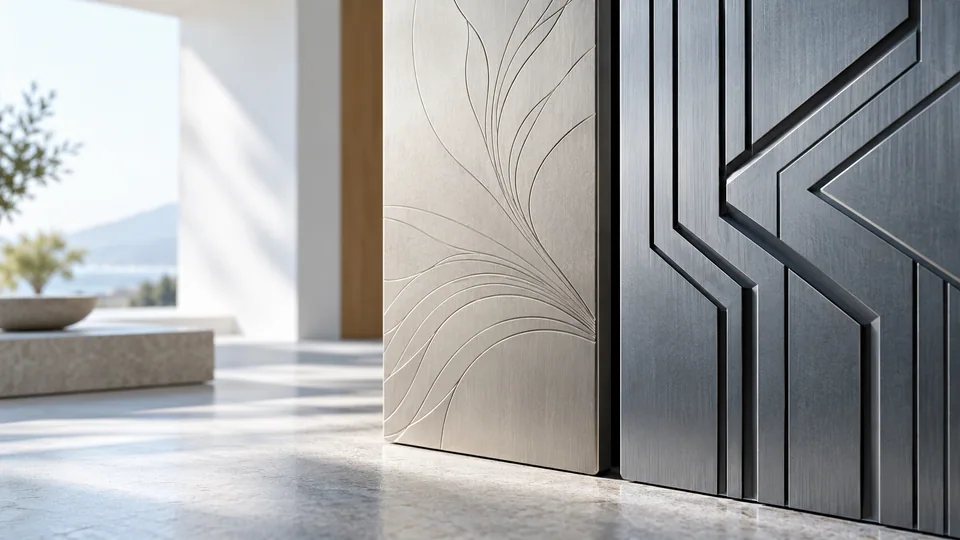
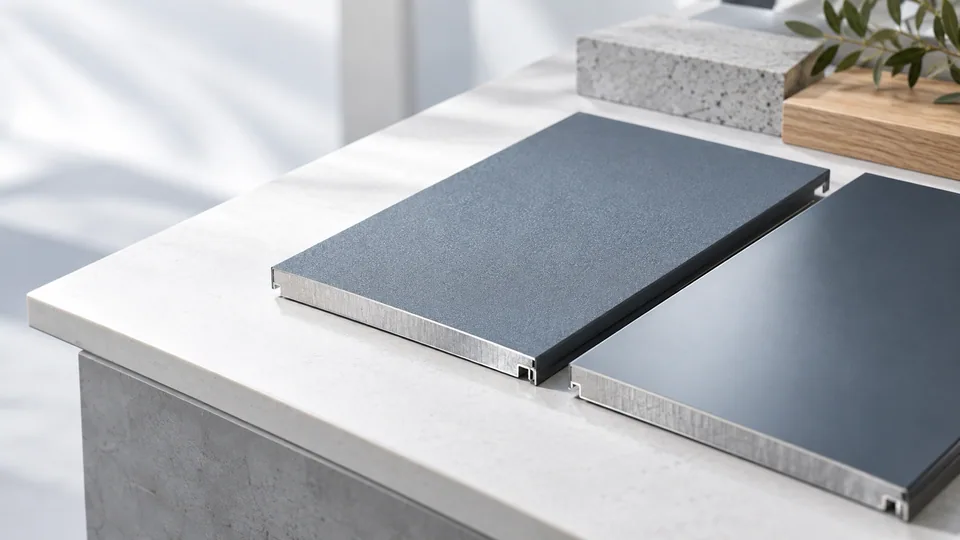
Ask to compare representative samples in the lighting expected at the entrance. Record the approved reference and identify which door parts it covers. Large panels, narrow profiles and decorative recesses may present the same specified finish differently, so photographs alone should not settle every appearance question.
For paired entrance and garage doors, review both systems together. Confirm the intended degree of coordination and how any acceptable variation will be agreed. Avoid replacing a recorded sample with an approximate color name when the order moves from design into purchasing.
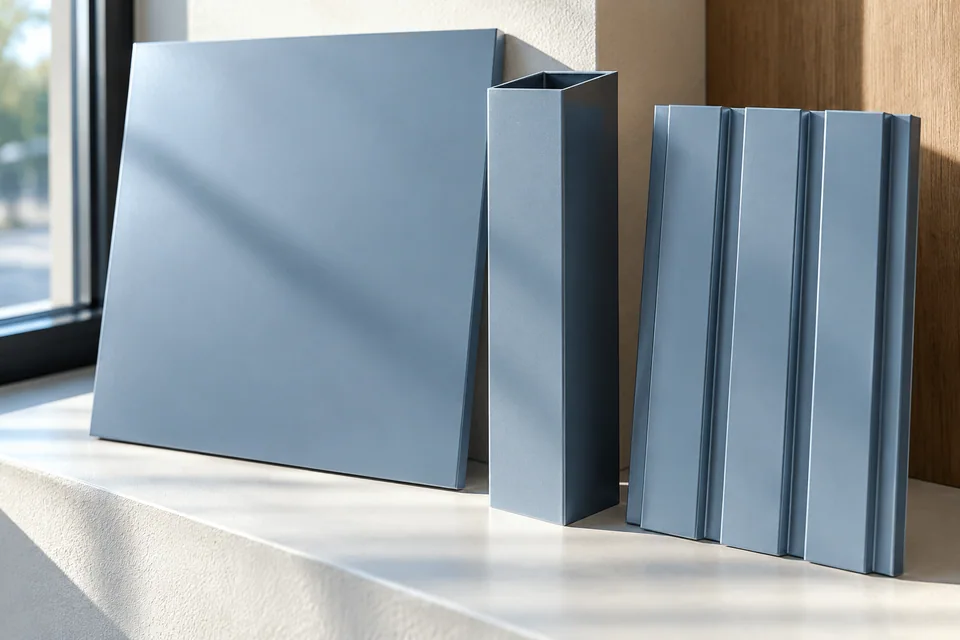
Connect the finish to the exposure
Describe the location, shelter, expected cleaning access and any relevant site conditions. Ask the supplier to state how the proposed coating is intended to be used and maintained. For demanding exposure, the project team should define the evidence required before a finish is accepted.
Do not infer a universal lifespan, corrosion guarantee or performance classification from the letters PVDF or the words powder coated. The powder coating guide provides a place to organize product-specific finish questions. Keep any unresolved evidence requirement visible in the approval record.
Which coating document belongs in the approval file?
Record the full specification designation and edition stated in the project brief. FGIA announced the 2026 editions of AAMA 2603, 2604 and 2605 for organic coatings on architectural aluminum extrusions and panels. That announcement establishes document scope; it does not certify a door, applicator or coating offered in a quote.
Ask the supplier to connect the selected coating product and applicator process to the evidence being submitted. Check whether the report concerns the actual substrate and finish family. A powder supplier’s brochure and an unrelated finished-panel test should not be merged into one claim.
Keep three approvals distinct: the appearance sample, the documented coating system and the complete door specification. If a substitution changes chemistry or pretreatment after color approval, reopen the technical review even when the color reference stays the same. For non-aluminum components, request the relevant substrate-specific specification.
For coordinated door and aluminum window packages, carry the same finish reference into the window schedule, but confirm the actual substrate, pretreatment and applicator evidence for each system. Matching color does not establish identical coating performance or complete-window ratings.
Approve the finish as part of the door package
The final record should contain the sample reference, coating identity, covered components, care document and agreed evidence. Ask how fabrication marks, joints and any separate hardware will be addressed so that the completed entrance has a coordinated specification.
Use the pivot door specification guide when a finish is being selected for a pivot assembly. Submit the complete package through the project quote form and request alternatives against the same door construction. The better choice is the proposal supported for the project’s actual requirements, with clear application and maintenance conditions, rather than the one carrying the most impressive label.
Before you specify
Questions worth asking
Does an AAMA reference mean the complete entrance is certified?
No. A coating specification addresses a defined finish scope. Whole-door structural, water, air and thermal requirements need their own applicable evidence.
Sources & further reading
About this guide
A practical starting point.
Use this guide to prepare your project brief and compare proposals. Construction details and installation requirements must be checked against the selected system and its approved documents.