In this guide
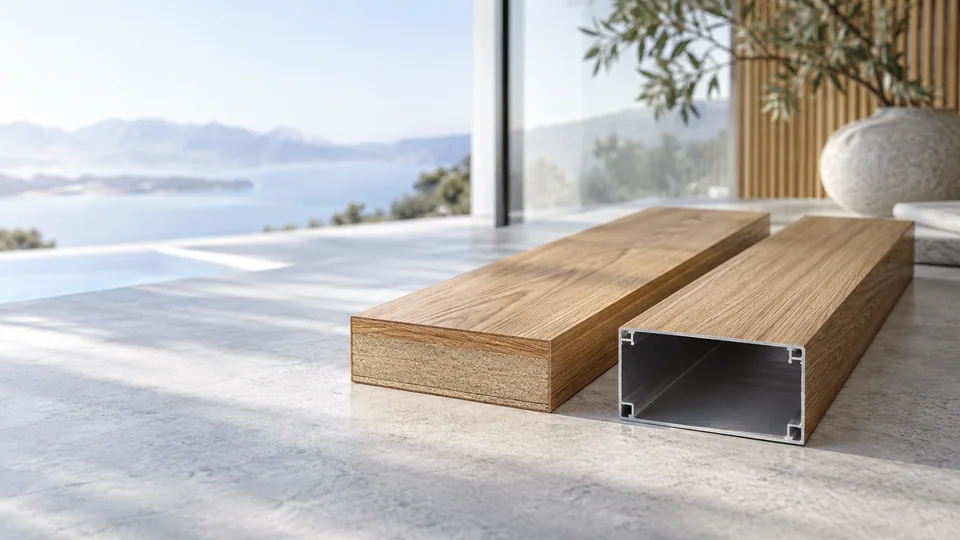
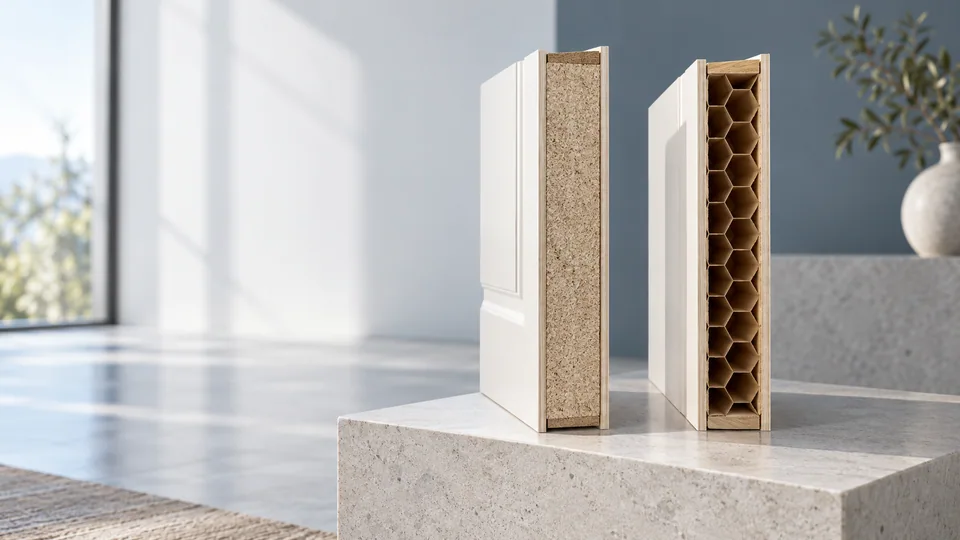
A door-core specification should identify the actual core material and construction, with the face, edges and hardware reinforcement described separately. Solid-core is not synonymous with solid timber, and hollow-core does not describe every detail of a lightweight leaf.
Start with the wooden door collection and identify the required appearance and use. Then ask for a construction description rather than treating a broad core label as a complete product specification.
What is inside the proposed door leaf?
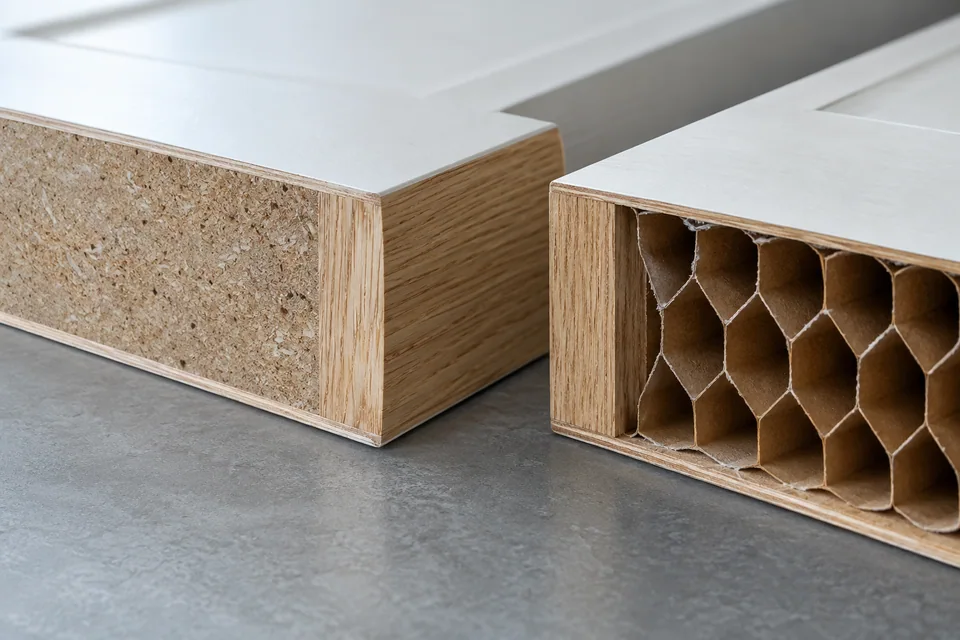
Request a section through the proposed leaf showing the core, face layers, edges and any reinforcement used for hardware. Ask which material is represented by terms such as engineered wood, solid-core or hollow-core in that particular proposal.
A veneer can form the visible surface over different substrates. Likewise, MDF or HDF may refer to a face material or another component rather than the entire core. The engineered wood and veneer family provides a starting point for separating these layers.
Compare the information each proposal provides
| Component or question | Required record |
|---|---|
| Core | Specific construction and material description |
| Faces | Material, surface finish and thickness where specified |
| Perimeter | Edge construction and approved treatment |
| Hardware zones | Preparation and supporting detail for hinges and locks |
| Finished leaf | Dimensions and assembly weight when available |
| Intended use | Room conditions and stated limitations |
| Performance | Relevant evidence for the complete door set |
Use the same opening, finish and hardware requirement when comparing alternatives. Otherwise, a price difference may reflect several changes rather than only the core.
Select by room requirements
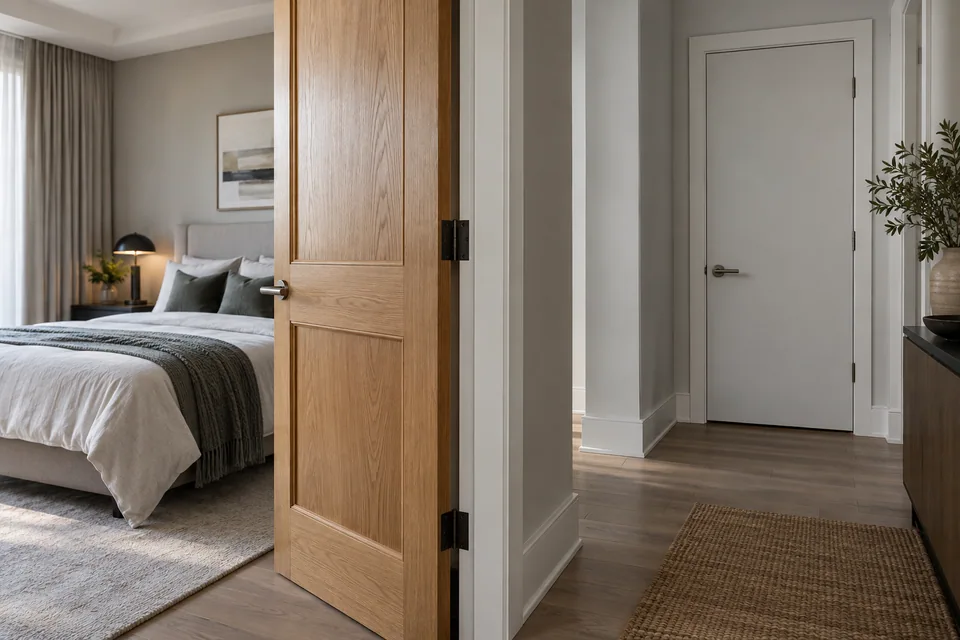
List the functions of each room and the requirements established by the project team. A bedroom, service room or connecting opening may have different priorities for appearance, privacy, hardware and everyday use. Group doors by these requirements before choosing a core construction for the entire project.
If acoustic performance is specified, request evidence for the proposed door set, including the frame, seals and installation conditions. Do not assign an acoustic value from density, perceived weight or the solid-core label alone. The same evidence-led approach applies to other performance requirements.
Include hardware and finishing in the choice
Ask how the proposed leaf accommodates the selected hinges, lock and handles. Any later change to hardware preparation should be checked against the actual construction. Avoid assuming that a leaf can be cut or altered on site without consulting the supplied instructions.
Review both faces and all edges in the finish specification. If the door is intended for a room with particular moisture or cleaning conditions, state those conditions and request the appropriate material and care information. A material name should not be converted into an unlimited water-resistance promise.
How do you avoid an unsupported acoustic or fire comparison?
Put construction and tested performance in different columns. Ask for the proposed core, face, edge and hardware preparation in the first. In the second, list only the documented rating of the complete relevant assembly, including any specified frame and seals.
AWI’s material scope separates lumber, panel cores and surface materials. It does not assign a universal fire or acoustic result to a core label. If evidence is missing, keep the performance requirement open rather than estimating it from weight or a cutaway image.
For purchasing, compare the room use, expected handling, finish and hardware needs. A sample can help identify the construction being proposed, while a traceable specification keeps that construction consistent across the order. Recheck hinge and lock preparation if a core substitution is proposed after approval.
Approve a material record that can be inspected
The interior material comparison guide helps organize the construction questions. Request a representative section, sample or other clear evidence of the offered leaf. Keep the approved material description associated with the finish sample and door schedule.
Before order approval, identify the frame, seals, hardware and accessories included with each leaf. Record any substitutions as revisions requiring review rather than informal equivalents. A good purchasing decision makes it possible to verify the delivered door against a defined construction and use case, without relying on the marketing distinction between heavy, premium, solid or lightweight.
Before you specify
Questions worth asking
Does solid-core mean the entire door is one piece of wood?
No. It may use an engineered core beneath a veneer or other face material. Request the manufacturer’s construction description.
Sources & further reading
About this guide
A practical starting point.
Use this guide to prepare your project brief and compare proposals. Construction details and installation requirements must be checked against the selected system and its approved documents.