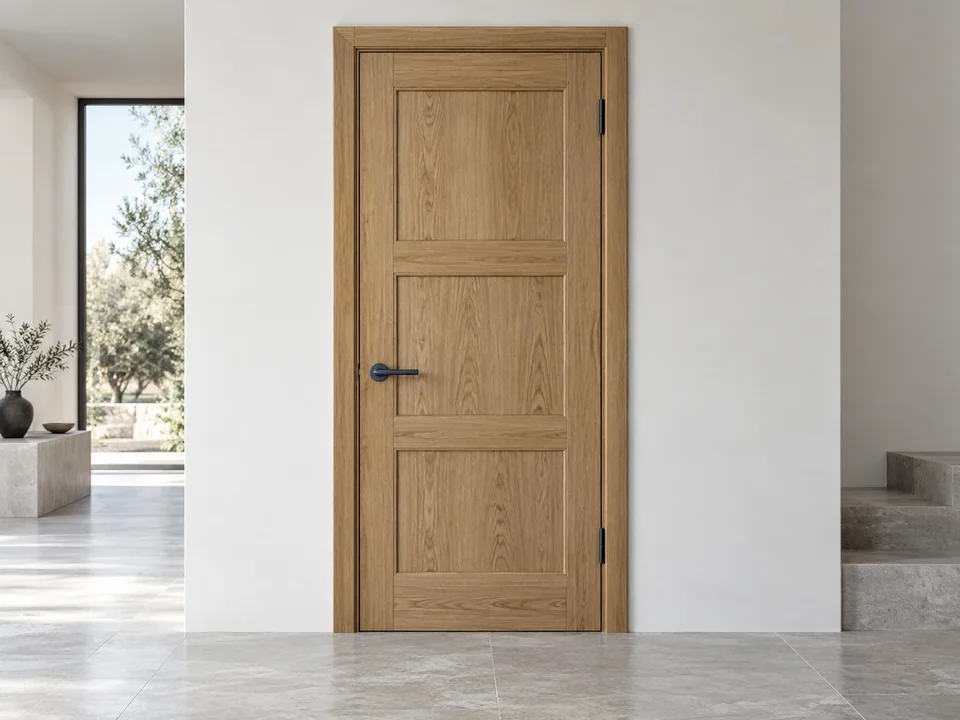
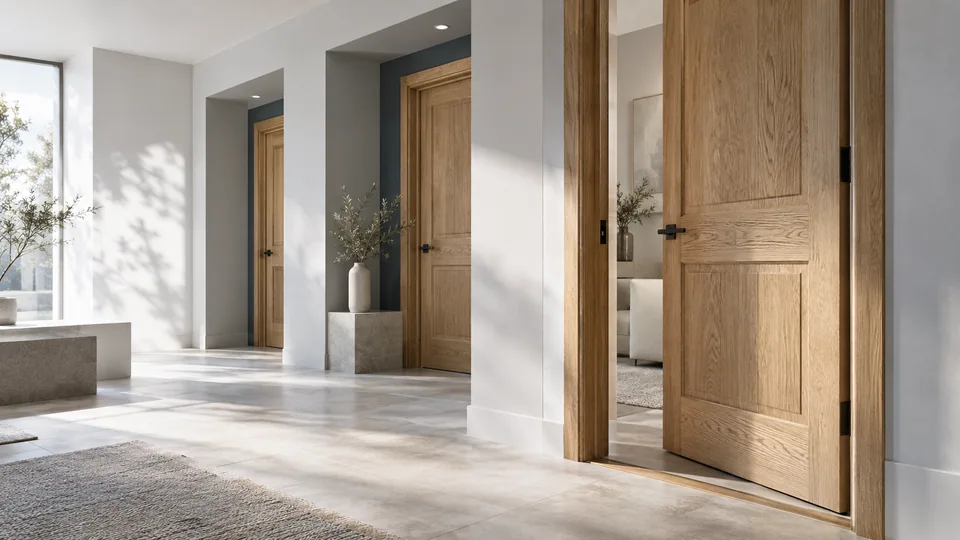
Solid wood doors are specified by the actual timber construction, species and joinery. The visible grain alone cannot prove that a whole leaf is solid wood; veneer and engineered-core products need separate descriptions.
What to resolve before choosing a design
| Decision | Information to confirm |
|---|---|
| Timber identity | Confirm species, source and whether the construction uses boards or joined elements. |
| Environment | Discuss the intended room, moisture exposure and site conditions. |
| Surface and repair | Agree the finish sample, edge protection and care instructions. |
Configuration and material choices
Requested species are assessed by project. Availability, legitimate procurement and consistency need confirmation before a species enters the approved order schedule.
Record frame material, leaf or panel construction, visible surface, glazing and hardware as separate specification fields. This prevents a finish name from being mistaken for the underlying construction. Each alternative should be checked against the same opening and intended use.
Name the solid-wood construction precisely
Specify the intended species and ask how the complete leaf is built, including panels, rails, stiles and any other elements. The phrase solid wood should describe the agreed construction, not simply the appearance of a wood-colored face. Record the frame construction separately and identify where different materials may be used within the package.
Use a physical sample to agree grain, color variation and the proposed finish. Discuss the room conditions, protected storage and product-specific acclimatization instructions with the supplier and installer. If material origin or an environmental claim forms part of the brief, request documentation tied to the actual supply. Establish how visible natural variation will be assessed so that it is not confused with damage or a different species.
Evidence and installation boundaries
Specification limits, material availability and performance documentation are subject to technical review. A material or component report is not automatically evidence for the complete door or window assembly. Tell us about the project requirements early so the applicable configuration can be assessed.
Installation must follow the agreed drawings and the actual product instructions, with responsibilities assigned to competent people. This collection is a selection resource, not a substitute for a product-specific installation manual.
Plan the next step
Explore Wood Species & Veneer Options for the related project task.
Explore Interior Door Materials Comparison for the related project task.
Explore Interior Door Packages for Fit-Out Projects for the related project task.
Explore Door Quality & Project Requirements for the related project task.
Send your project brief with opening sizes, quantities and the documents already available.
Before you specify
Questions worth asking
Can the size and finish be customized?
Share the opening dimensions, intended use and preferred finish. Feasibility, material availability and the final configuration are subject to technical review; no universal size range is assumed.
What should I send for a quotation?
Send a marked drawing or door schedule, project country, quantity, installation context and any specified performance requirements. Identify which hardware and glazing you need included.
Are the images confirmed product specifications?
The images illustrate design and finish options. Your written quotation, approved drawings and material samples define the final configuration and supply scope.